Why Silver Looks Different Beside Linen
Why silver looks different beside linen: use daylight, fabric texture and a few room-side observations to judge how a silver surface reads at home.
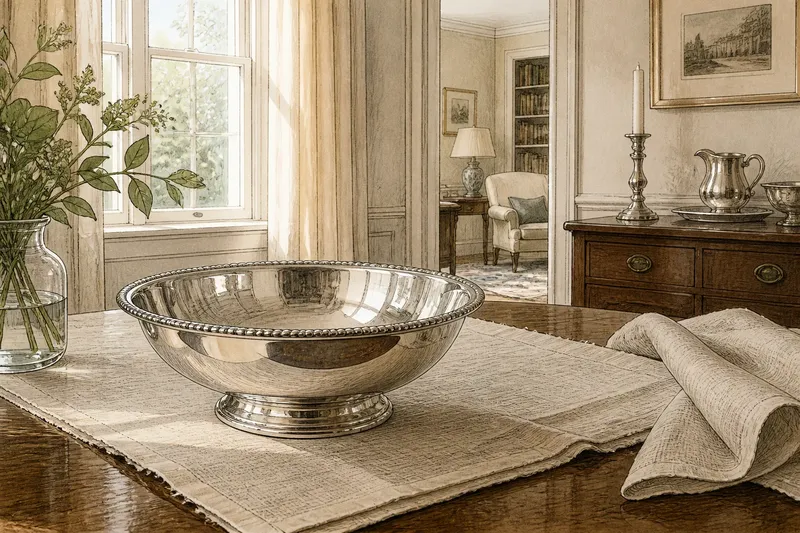
Set a silver bowl on a folded linen napkin and the bowl may seem softer than it did on the kitchen counter. Move it near a window and the surface shifts again: a pale gleam appears, while the cloth keeps its quiet, uneven texture. Why silver looks different beside linen is not a question of choosing the correct finish. It is a matter of noticing what the room and its neighbouring materials are doing to the light.
You can make those observations at home without turning the exercise into a decorating rule. Keep the object still, change one nearby condition at a time, and look from the places where you actually spend time. Linen is useful because its woven surface takes light differently from smooth silver, but the same sort of comparison works with wool, wood or matte paint.
Start with the silver
Begin with the object in its usual place, before adding fabric or rearranging the room. Look at it from a seated position and then from standing height. Notice whether you see a clear reflection, a soft haze, bright points of light, or a mixture. These are observations, not grades.
Silver does not behave like a single, uniformly bright plane. A polished curve can pick up a window, a dark doorway and your own movement, while a brushed or patterned area breaks those reflections into smaller patches. Even on one object, the impression changes across the surface. A shallow dish may hold a bright edge and a dim centre; a candlestick may reflect a pale wall on one side and a shadow on the other.
For a fair comparison, wipe away obvious fingerprints with a suitable silver-care cloth, then leave the object where it is. Do not polish it just to make the comparison more dramatic. A naturally softened surface and a newly bright one answer different questions about the room.
Add the linen nearby
Place a piece of linen beside the object rather than covering it. A napkin, runner or loose swatch is enough. Keep the cloth in the same general field of view, and avoid folding it into a tall, crisp shape that casts a strong shadow. The point is to see two surfaces together, not to construct a miniature still life.
Linen has small irregularities: raised threads, shallow creases and changes in the way its weave catches light. Against these, silver can look smoother and more distinct. Yet the cloth may also make the metal seem less stark, especially when its colour is warm or muted. The effect depends on the fabric’s shade, the silver’s finish and what lies beyond them.
Look at the boundary where cloth meets metal. A narrow, bright highlight may seem sharper beside a textured weave than beside a smooth surface. A dark crease in the linen can make nearby silver appear brighter by comparison, though the silver itself has not changed. This is a contrast in the scene, not a mysterious alteration in the object.
Watch the room light
Now observe the arrangement in the light it receives during ordinary use. Daylight can shift as clouds pass or as the sun moves, so give the scene more than a passing glance. Then check it under the lamp you use in the evening. You are not trying to recreate identical conditions; you are learning which parts of the room appear in the silver.
A polished surface reflects its surroundings with particular clarity. A window can become a bright shape, while a dark bookcase may appear as a broad shadow. Linen diffuses light across its weave rather than reflecting a clean image in the same way. Under a warm lamp, the fabric may take on a warmer cast, while the silver reflects the lamp and nearby colours. Under cooler daylight, the contrast can feel crisper.
Stand in the doorway, then sit where you would normally sit. If the silver catches a bare bulb or an unpleasant glare from the window, a small change in position may matter more than changing the cloth. Do not stare directly into a bright reflection; view the arrangement from normal room positions. The useful question is whether the object reads comfortably in the space, not whether it produces a dramatic glint.
Change one neighbour
Once you have noticed the linen effect, try one other nearby material. A woollen cloth absorbs and softens light differently from a crisp cotton napkin. A pale wooden tabletop brings a visible grain; dark lacquer gives the silver a more defined light-dark contrast. Matte wall paint offers colour without a clear reflected image, while glass can add its own highlights and competing reflections.
Keep the object and its position fixed while you make each comparison. If you move the silver, swap the fabric and turn on another lamp all at once, you will know only that the scene changed. A single adjustment makes the observation more useful. You need not record anything unless you are comparing several possible locations; a short note such as “window reflection in bowl” may be enough.
Say you have an inherited silver-plated bowl on a console with a cream linen runner. In daylight, imagine that its centre looks dull while the rim catches a hard window reflection. You could leave the bowl in place, slide the runner a little so less cloth sits directly beneath the rim, and check again from the doorway. The expected observable result is a different balance between the bright edge and the textured fabric, not a change to the bowl’s finish.
Read the surface details
Texture can change the apparent character of silver even when the surrounding cloth stays put. A smooth, polished area tends to show larger, more recognisable reflections. Hammered, engraved or brushed areas interrupt those shapes. On an object with mixed finishes, compare each area separately rather than calling the whole piece shiny or dull.
Patina and tarnish also affect what you see. Darkened recesses may give a chased pattern more definition, while a uniformly polished object can reflect more of the room. These qualities are not simply faults to correct. If you are unsure whether a dark area is intended, or whether an object is silver-plated, check its markings and seek advice from a reputable silver specialist before using an abrasive polish.
Fabric texture matters at close range, but the room’s larger shapes matter too. A pale linen cloth can sit beside silver in a dark room and still look subdued; a dark window frame reflected in the metal may dominate the impression. Check the object against the actual backdrop, rather than judging it by the cloth alone.
Questions about silver?
Does linen make silver look warmer?
It can, particularly when the linen is cream, flax-coloured or otherwise warm in tone. The cloth may alter the surrounding impression, while the silver reflects its colour and the light nearby.
Why does polished silver look darker in one place?
A polished surface reflects the room, so a dark doorway or shaded corner can appear in it as a dark patch. The object may be sound even when one part of its reflection looks dim.
Should silver sit directly on linen?
That depends on the object and the cloth’s intended use. For display, a loose runner can soften the setting; for storage or contact with food, follow the object’s care guidance and use an appropriate barrier where needed.
Can I judge silver under a phone torch?
A phone torch can reveal a reflection, but it creates a concentrated light that may not represent the room. Check the piece under the daylight and lamps you normally use before deciding how it reads.
Keep the comparison useful
Room-side observation is most helpful when it answers a practical question: does the silver disappear against the cloth, catch an unwelcome glare, or sit clearly among the other surfaces? If it seems too conspicuous, moving the object away from a direct reflection may be enough. If it feels visually lost, a change in backdrop or viewing angle may make its outline easier to read.
Do not use fabric as a polishing material, and avoid leaving damp linen against silver. For display, a clean, dry cloth can provide a soft setting; for storage, use materials intended for silver rather than a decorative runner. Follow the object maker’s care instructions where they apply, especially for plated, lacquered or mixed-material pieces.
The next time you wonder why silver looks different beside linen, leave the object where it belongs and watch the reflected shapes before changing anything. A window, a shaded wall and a folded edge of cloth can explain more than a catalogue description of the finish. Once you can see those influences, choosing a place for the piece becomes a quieter decision, which is usually the better sort.