Tray, Bowl, or Candlestick: Choosing One Table Accent
Choose a silver table accent by matching its footprint and height to the table’s purpose, so the object adds presence without obstructing daily use.
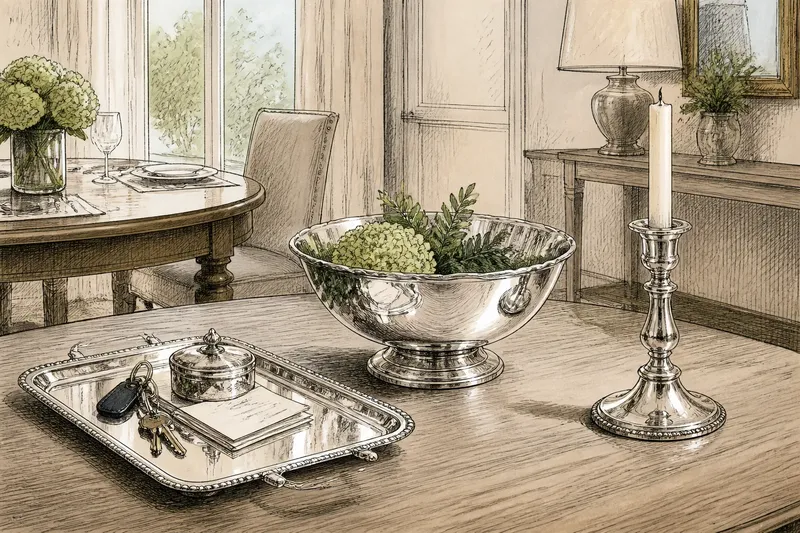
A silver tray on a dining table can look ready for guests; the same tray on a narrow console may leave nowhere for keys. Choosing a silver table accent is less about which form is prettiest than what the table needs to keep doing. A tray, bowl and candlestick each take up space differently, direct the eye in a different way and suggest a different use.
Start with the table’s purpose, then consider footprint and height. The best choice is the one that gives the surface a clear centre without making its ordinary job awkward.
Choose by table purpose
Before comparing shapes, name the work the table does. A dining table needs room for place settings and serving. A coffee table has books, cups and remote controls to accommodate. An entry console may need to remain clear enough for a bag or a small parcel. The object should fit around those routines, not ask everyone to rearrange the room for its benefit.
Notice where people reach and where things tend to land. A table used for meals benefits from a low, compact centrepiece that can be moved without ceremony. A console that mostly holds a lamp may accept a taller accent, provided it does not interrupt a doorway sightline. The intended role narrows the choice before finish or ornament enters the discussion.
1. Pick a tray for order
A tray gives loose objects a boundary. Its rim gathers a small group into one visual unit, which can make a broad tabletop seem composed without filling it. On a coffee table, it might contain a coaster stack, a small jar and a remote; on an entry console, it can corral keys and post. The silver surface adds a bright plane, while the rim keeps the arrangement from spreading.
Footprint is the main decision. A tray that occupies the table’s useful working area is not made practical by having elegant handles. Leave clear space for the activities the surface serves, and make sure the tray can be lifted or slid aside without disturbing everything around it. A compact, shallow tray usually reads as a deliberate accent; a broad one starts to function as furniture within the furniture.
Height is modest, but the rim still matters. Raised edges can interrupt the view across a coffee table or catch sleeves during dinner. If the tabletop already has a strong pattern, a plain tray gives it a quieter frame; if the surface is plain, a little engraving or a shaped edge can supply detail without adding another object.
Choose a tray when the table needs containment or when several small necessities would otherwise look scattered. Skip it when the table must stay open for serving, writing or setting down larger items. A tray is useful precisely because it groups things, so it is a poor choice for a surface that needs to remain mostly empty.
2. Pick a bowl for a centre
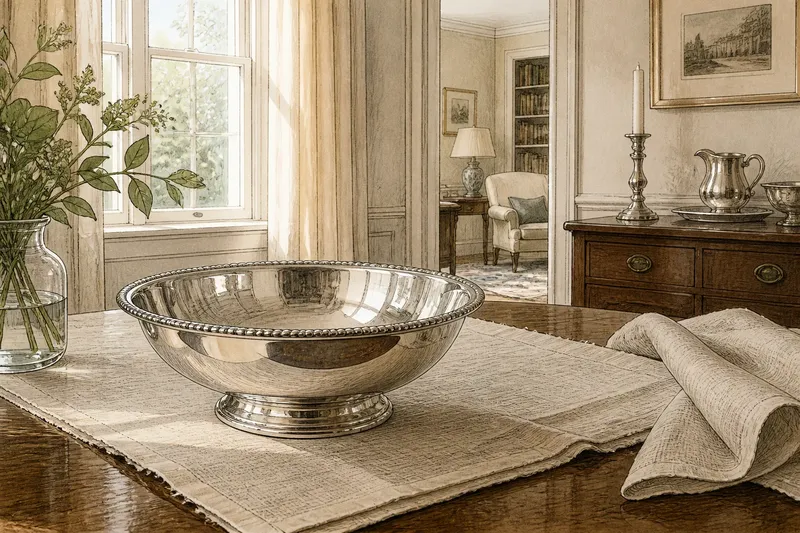
A bowl makes a more sculptural centre than a tray. Its curved outline gathers the eye, and its interior can hold something seasonal or simply remain empty. On a dining table, a low bowl can sit between place settings without creating a wall. On a coffee table, it gives the arrangement a visible focal point while taking up less visual space than a crowded collection of small ornaments.
Judge the bowl by its widest point, not only by the diameter of its base. A broad bowl may overhang the useful zone even when it looks compact from above. The shape also affects reach: a rounded vessel can make nearby cups feel farther away, while a low, open form leaves more of the tabletop visible. If the table is small, an airy outline can matter as much as the actual footprint.
Height depends on what the bowl will contain. An empty bowl or one holding a few low objects keeps the centreline open. Tall stems or piled fruit change its character and may obstruct conversation or sightlines. Decide whether the bowl is meant to be a vessel or a sculpture; asking it to be both can produce an arrangement that is hard to use and harder to explain.
Choose a bowl when the table needs one settled focal point, particularly if the surface is otherwise bare. It suits a table where a contained centre can stay put between uses. It is less helpful when the surface is already crowded or when objects need to be picked up and put down throughout the day.
3. Pick a candlestick for height
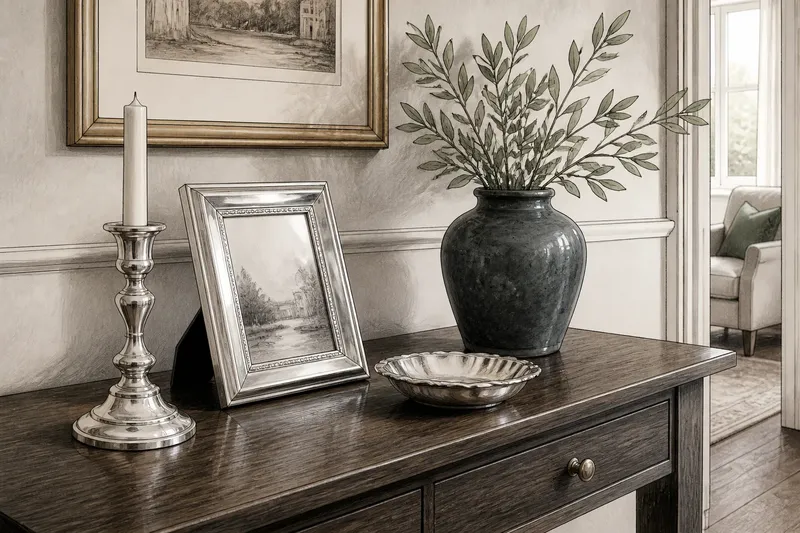
A candlestick introduces a vertical line. That makes it useful on a long table or a low console where a flat object might disappear against the surface. A single candlestick can draw the eye upwards without claiming much tabletop area, though its base still needs a stable, unobstructed patch. The visual footprint may be small; the practical footprint includes room around it.
Height is the defining choice. A tall candlestick can interrupt conversation across a dining table, while a low one may be lost among serving dishes. Consider seated views as well as the view from the doorway. On a side table beside a chair, the flame and wax may also be close to fabric, papers or other everyday objects. Keep the arrangement away from combustible materials, and follow the candle maker’s safety directions.
A candlestick can look complete on its own, so it does not need a cluster of companions to justify its presence. If the table’s job is practical, its narrow base may leave more usable surface than a tray or bowl. But it is not a catch-all and does not contain small items; choose it for its line and light, not as a substitute for storage.
Choose a candlestick when the table can benefit from height and there is a safe, stable place for it. For a dining surface used during meals, consider whether the piece will need to move before service. A beautiful obstruction is still an obstruction, only with better manners.
4. Compare the footprints
Footprint means more than the outline touching the table. It includes the room needed to use the object, reach around it and move it when the table changes purpose. A tray may occupy a larger rectangle but make its contents easier to move together. A bowl may have a smaller base yet a broad rim. A candlestick may use little surface area but need clear space around the flame.
Try a simple paper outline before choosing. Cut or fold paper to the approximate shape of the object, place it where you expect the accent to sit, then use the table as usual. Set down a mug, a book or a serving dish if that is part of the routine. This is a way to check the fit at home, not a test of the silver piece itself.
Say you have a narrow coffee table that must still hold two cups and a book. You mark out a broad tray and find that the book has nowhere to land; a low bowl leaves the cups room, but makes the table feel centred and less flexible. If the table is mainly for guests, that may be welcome. If it is the household’s daily landing place, the tray’s organising role may be worth choosing in a smaller size.
5. Read the height
Height determines how much an accent changes the room’s sightlines. A tray keeps attention low and horizontal. A bowl creates a rounded centre, usually with a little more visual volume. A candlestick draws the eye upward. These are distinct effects, even when the objects share the same silver finish.
Look at the table from the positions where it is actually seen: seated at dinner, sitting on the sofa, or entering through the front door. Notice whether the object blocks faces, competes with a lamp or disappears against a taller arrangement nearby. A low object can feel too slight on a deep console; a tall one can make a compact coffee table look crowded.
Also consider what is already above the surface. A pendant light, wall mirror or table lamp may supply the vertical emphasis the room needs. In that case, a tray or low bowl can balance the composition. Where the surrounding furniture is low and the wall above it bare, a candlestick may provide a useful change in line without adding a large base.
6. Match the daily use
The table’s existing purpose should decide what kind of interruption it can tolerate. A dining table that is set and cleared often benefits from an accent that is easy to lift. A hallway console may support a permanent arrangement, but still needs space for the objects brought home. A side table beside an armchair may be too useful for a broad centrepiece and too small for a bowl that cannot be moved.
For quick comparison, ask these questions:
- Does the table need to contain small items? A tray makes a defined landing area.
- Does it need one quiet focal point? A bowl offers a centred shape without demanding extra companions.
- Would a vertical accent improve the view? A candlestick adds height, if sightlines and safe placement allow it.
- Must the surface change jobs often? Favour a form that is easy to lift and leaves usable space around it.
- What already occupies the visual centre? If a lamp, flowers or a large book stack is doing that work, a second focal point may be unnecessary.
When choosing a particular silver piece, check its care requirements and any maker’s directions before placing it near food, liquids or an open flame. Those details depend on the object and its finish, not just on whether it looks sturdy.
Questions worth asking?
Which silver accent suits a small table?
Look first at what must remain within reach. A compact tray can group essentials, while a low bowl can act as a centre without adding height. A candlestick is suitable only if its base and safe clearance do not crowd the working area.
Can a candlestick go on a dining table?
Yes, if its height does not block conversation and it can sit securely away from napkins, serving dishes and other combustible materials. If it must be moved for every meal, decide whether that small ritual is welcome or merely another task.
Should a silver bowl be left empty?
An empty bowl can be an intentional sculptural accent, especially when its shape is distinctive. Filling it is useful only if the contents suit the table’s purpose and do not make the bowl difficult to reach around.
How do I choose between a tray and a bowl?
Choose the tray when small objects need a boundary or need to move together. Choose the bowl when the table needs a single contained focal point and does not need a place to gather loose items.
Make the final choice
Decide in this order: identify the table’s daily job, mark the space the accent can occupy, then choose the height that suits the room’s sightlines. A tray is the organiser, a bowl is the centre, and a candlestick is the vertical note. Those roles are more useful than choosing by shine alone.
If two forms still seem equally suitable, choose the one that is easiest to move without disturbing the table’s ordinary use. The right silver table accent should make the surface feel considered while leaving room for the mug, the book or the dinner that was already meant to be there.